

Breathe. Let go. And remind yourself that this very moment is the only one you know you have for sure.
Oprah Winfrey
You’ll find a purposeful common theme throughout my blog: back to basics. The whole basis of this blog is to remind us all where we started from, and to return to center when things get a little tough. It doesn’t matter where you are in your life, fitness routine (or lack there-of), yoga practice, career, education, family life, or connection back to nature. We all start from the ground up. This practice will allow us to really remember the fundamentals of life.
Here in today’s yoga practice, we return to center. Grounding is literally proven to reduce stress and inflammation by restoring your body’s natural electrical balances as stated on healthline.com and the National Center for Biotechnical Information among other experts. I encourage you to do more research on the subject, since I am not a doctor, nor do I play one on tv!
So, how do you get grounded? Simple! Take off your shoes, and walk barefoot on the earth! Yes. I am totally serious! Literally reconnect with nature by touching nature! However, if you don’t have the opportunity to do that every day; i.e. it rains, or you live in a concrete jungle; you can grab one of these grounding mats from Amazon or practice the following five basic yoga asanas I’ve listed for you below to return your mind back to center, destress, and reduce your blood pressure just a little bit.
The first step: breathe!
Oxygen, like water, does wonders for the body! Using your lungs to their fullest capacity will greatly change your mind, literally. The oxygen content now reaching your brain will greatly improve its function, as well as your muscle recovery and growth. These breathing exercises by lung.org can help make your lungs more efficient, especially if you are a smoker or suffer from lung ailments as described on their website. So remember to incorporate breathwork into every single fitness exercise you do. Let’s get to grounding!
Maybe you are searching amongst the branches, for what only appears in the roots
Rumi
Throughout the article, you will find links to references for quotes and other yoga topics. Feel free to click them and learn more. There are also link to products I suggest that may be useful during your practice. As an Amazon Associate, I earn from qualifying purchases. As a mother of 5, we appreciate your support!
A few items you may need are as follows: (click to shop items on sale) grounding earth mat, thin yoga mat, thick yoga mat, round yoga mat, kids yoga mat, yoga blocks, yoga bolster, yoga blanket, yoga strap, yoga pillows, yoga ball, a chair, eye pillows, scented eye pillows, essential oils, my favorite essential oils, essential oil diffuser, my favorite diffuser that everyone admires, women’s yoga top, women’s yoga bra top, women’s yoga shorts, yoga leggings, women’s yoga pants, men’s yoga tops, men’s yoga shorts, men’s yoga pants, kids yoga clothes, my favorite activewear for all humans, yoga socks, toes socks, yoga gloves, candles, sound machine, headphones for yoga, guided meditation audio, guided meditation book, meditation mini chime and gong, meditation beads, zen garden, and more yoga series to practice.

Photo Owned be Lindsey’s Life
The very first asana to practice: Easy pose – Sukhasana
The most basic of all asanas, easy pose, is the first posture I teach. It begins and ends every class. We calm our minds, focus our breath, and reconnect with our intentions.
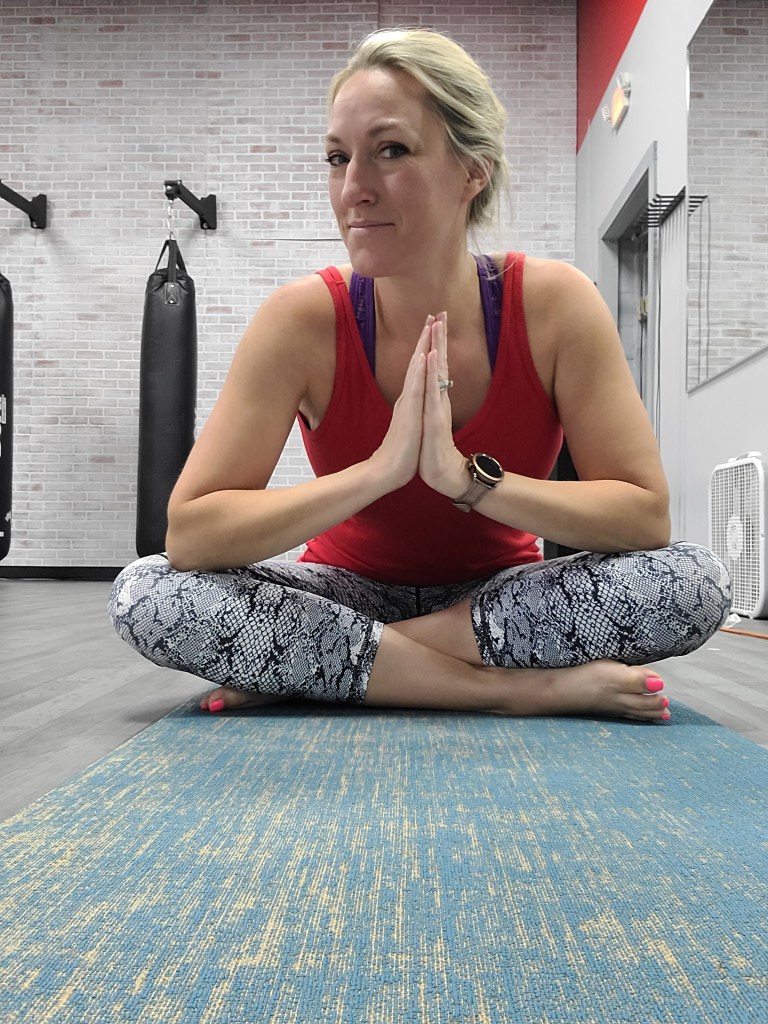
The basic cues are as follows: align the spine with the ears, shoulders, and hips. bring the bellybutton toward the spine to support the lower back. Grow tall through the crown of the head, slightly tucking the chin to level the head, and align the jawline horizontal to the earth. Move the flesh of the buttocks away from the sit-bones to level the hips. Hands can lie palms facing upward on the legs, forefingers and thumbs touching to cycle the internal energy within you. Or, hands can be clasped in front of you in prayer pose, cycling energy through your fingertips. Breathe! Release your mind. Focus inward on your intentions. Release any negativities back to mother nature, and accept the positivities she is giving you, filling their voids. Take 5-10 deep inhalations. Completely exhale all the way down to the base of your lungs, wait for a moment without clenching your throat, then inhale again. Feel the grounding in your roots.

The next asana: Cat-Cow pose – Marjaryasana-Bitilasana
There are many variations of this pose which include using blocks to assist your wrists, a blanket to support your knees, and of course the simple table-top posture in which you stay and breathe and release to your surroundings. You are welcome to breathe through the movement as I describe the cues, or simply stay in each asana to deepen the stretch as you breathe through the release.
As you ground your hands, knees, and tops of your feet (or toes curled under to the earth beneath you,) your mind should reconnect with what your body is feeling. According to the Yoga Journal “The slow rhythm you create when you move between Cat Pose and Cow Pose synchronizing your breath and body incites the relaxation response (parasympathetic nervous system) and deactivates your stress response (sympathetic nervous system). When practiced with mindfulness, the pose also enhances body awareness.”
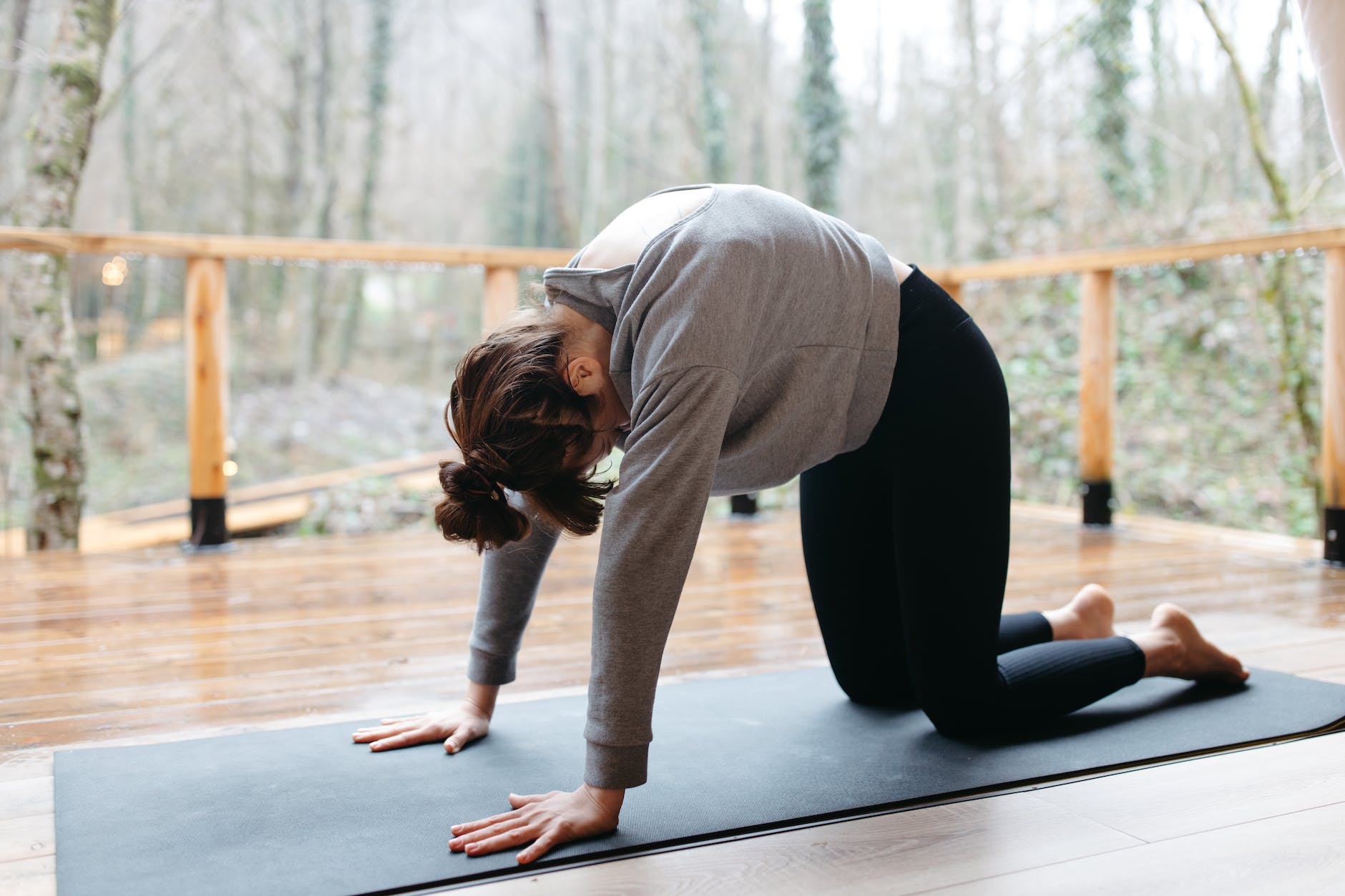
When practiced with mindfulness, the pose also enhances body awareness.
Yoga Journal
To move fluidly between the poses, start with cat and round into cow. From a balanced table top, begin to unwind the spine by tucking the tailbone under and engaging the gluteal muscles, releasing the sacrum and separating the lumbar vertebrae in the lower back. Moving fluidly through, round the spine and engage the abdominals. Pull the shoulder blades apart and press the palms into the earth. Feel the support of mother nature pressing up against your hands, giving energy back to your strong arms as you lift your shoulders up toward the sky and pulling apart the blades. Tuck your chin enough to separate the cervical spine but not too much to crunch the front of the throat. Ensure the breath has room to move through the trachea to and from the lungs. Breathe for 30-60 seconds deepening the posture pressing into cat. Release any tension in the lower back and between the shoulder blades with the breath.
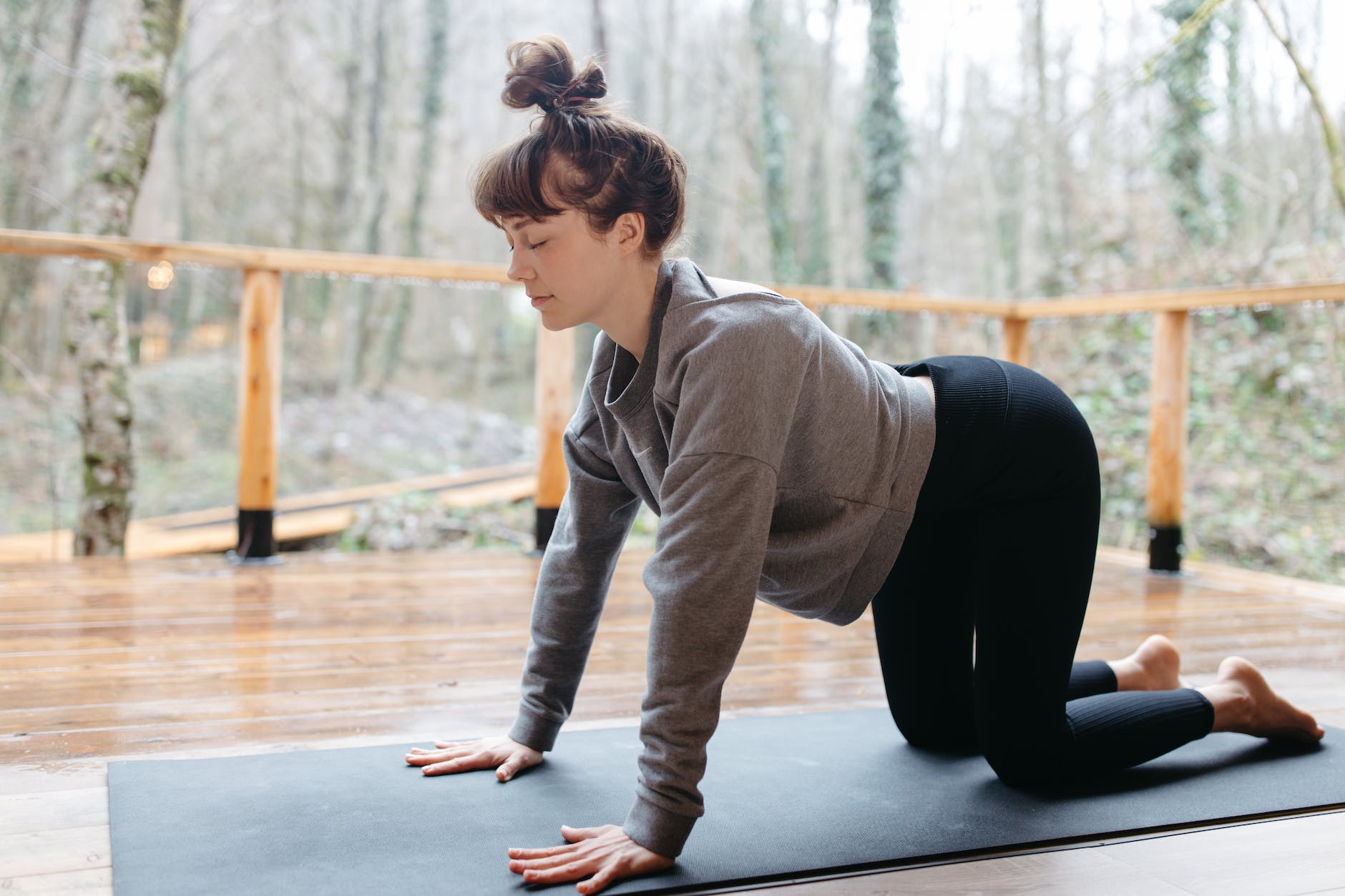
When you have released completely into cat, begin to tip your tailbone up to the sky releasing your gluteal muscles, drop your belly button down to release your abdominals, and bring your chin up toward the sky without putting pressure on your cervical spine. Breathe. Release. Drop the belly a little more. Lift the lower jaw over the upper jaw if you want a deeper stretch through the front of the body. To deepen even more, reach your tongue up toward your nose and feel a complete stretch through your throat. This invigorates your tissues around your throat, neck, thyroid, TMJ, and trachea. Try not to crunch the back of your neck as you lift your chin and imagine space between each cervical vertebrae (through the back of the neck). Drop even deeper with the breath and feel rooted through the palms, knees, and feet.
Once you have released fully in cow (conscious breathing for at least 30-60 seconds), you may begin to unwind the spine starting with the tailbone, moving up to the crown of the head rolling through between cat and cow seamlessly, yet consciously remembering all the points of interest along the way. Most importantly, release your negativities, reconnect with the earth, and just breathe.

Third, we are going to embrace one of the most grounding and rooted postures in yoga; becoming a tree. We will practice: Vrksasana
Although there are so many grounding asanas you can incorporate into your yoga practice, I feel this is an integral pose to getting back to your roots! As Yoga Journal confirms, “In this pose, you find a sense of groundedness through the strength of your standing leg.” You begin the strengthen your entire leg from the muscles in your base foot through the thighs and into the gluteal muscles. If you practice this pose directly on the earth, you will most definitely feel the connection of growing tall like a tree, breathing in all that is goodness and light.
In tree pose, we practice balancing on one leg, which strengthens the core, and solidifies all the muscles in our trunk while stretching through the opposite thigh and glutes. The exalted arm posture lengthens the torso to grow tall toward the sky and sun, stretching the shoulders and sides of our torso while bringing the shoulder blades together and tightening the muscles in the upper back, opening the chest for the breath.
This posture is especially helpful if you sit all day and arch your back at a computer or while driving. This reverses the effects of an aching cervical spine from hunching your back all day and allows breath to flow fully through open lungs after concaving your chest at a computer or while driving long distances.
Start with feet hip width apart for best balance. Root through the heels and lengthen through the back of the legs. Tuck the tailbone down just a little so you prevent the lower back from arching and support your posture. Engage your quadriceps and gluteals to align the pelvis, bring the belly button toward the spine, to support the lower back, and open the chest by rolling your shoulders back so your arms hang easily by your side, palms open facing forward. Grow tall through the crown of your head, chin slightly tucked to keep your ears level over your shoulders. Your heels, hips, shoulders, and ears should now all be in alignment.
What makes this pose special is that it teaches you to explore your connection with your body.
Yoga Journal
Stand here for a breath or two before moving into tree. When you are ready, bend one knee and begin to move that foot up the trunk of the opposite, rooted leg. Feel the balance take place, strengthening your rooted leg and beginning to stretch the inner thigh of your bent leg as you open the front of your body to create space in the pelvis. Align your bent leg with the plane of your body, engaging your gluteals and ensuring your raised foot comes to rest below or above your grounded knee, but never on the knee itself.

Stand and balance. Listen to your body. Pressing your grounded foot into the earth, grow taller with the crown of the head and begin to lengthen the torso as your exalt your arms toward the sky. Hands can be separate or in prayer, clasped with the index fingers pointed to the sky. Use the strength of each arm to lift up the opposite arm. Create space for the breath as you bring your shoulder blades closer together and drawn down your back to rest. Lengthen the spine. Strengthen the core. Stretch the sides of the body. Ground through a strong, rooted leg and foot. Open your hips and release with the breath. Stand here, gazing at one point about 10 feet away, keep your focus, and begin to look through that point.

Reconnect with your body. Listen to your body. Calm your mind. Breathe. Balance. Explore. After 30-60 seconds, slowly return your foot to the earth. Reposition back to mountain (standing) pose. Take a breath to unwind. Shake out your legs and arms. And bring your body and mind back to center. Repeat on the other side. Stay grounded, rooted, strong, and connected. Breathe.

It wouldn’t be a grounding practice without Goddess Pose: UTKATA KONASANA, also known as Fierce Angle Pose.
According to the basics of nature: “we all possess both masculine (governed by the sun and strength) and feminine energy (directed by the moon and nurturing qualities).” So rest assured ALL humans can and should successfully and freeingly practice this asana. To learn more about this back-to-basic methodology, visit Tummy.com and practice their Yin-Yang yoga series.
This posture improves hip function, knee and ankle flexibility, core and back strength, and encourages a complete energy boost and balance emotions. It helps prepare the body for meditative practices as well as releasing negative energy as a heart opener, making room for positive energy to flow through. It is also a great pose to work on during pregnancy, since it creates space for the hips to open, making room for baby and birthing.
Through the rooting action of the feet and wide opening of the hips and pelvis in Utkata Konasana, the Root and Sacral Chakras are stimulated, elevating self-esteem, bringing self-awareness, enhancing confidence, and enabling creative, sexual, and reproductive energies.
Tummee.com
Note: You can grab a chair, block, or yoga ball to balance your hips on as you sit in this fierce hip opener.
To begin, stand tall in mountain pose, feet hip width apart, arms by your side. Take a breath and walk your feet out to a wide, sumo stance about 3 feet apart. Keeping the back straight and tall, begin to bend the knees and lower the hips. Keep the tailbone tucked so the hips stay in alignment and the back continues to lengthen. Grow tall through the crown of the head, and lower your hips until you feel your thighs engage to a level where you can hold it. If it burns too much, you can back off at any time. But ask yourself to move deeper, hold longer, and breath through the fierceness before you stand again. If you are using a chair, block, or ball, adjust the level of your squat ,if possible, to be comfortable enough for your hips to open without pain or resistance in your hips, knees, or ankles. Ensure your knees are positioned at a 90 degree angle aligned with your ankles. If not, walk your feet out so your knees are over your ankles and not over your feet.
Focus now on your spine. Lengthen your torso. Open your heart by pressing your palms together, and placing your elbows and triceps against your inner thigh and knee. Sit up tall. Breathe into your thighs and hips. Feel the grounding. Recenter. Reconnect.

If you’d like to continue working into cactus arms, gently release your elbows from your inner thighs and unwind your arms. Place your thumb and forefingers together, palms facing upward. Raise your arms so that your biceps are parallel to the earth. Keep the elbows bent at a 90 degree angle. Hold.
If you’d like to lower your squat to full Goddess pose, allow your thighs and upper arms to become parallel with the earth. Stay grounded in your strong feet. And grow tall through the crown of your head. Support your back with your abdominals, and open your chest with the breath. Hold for 30-60 seconds. Then slowly unwind, coming back into standing and returning back to Mountain Pose.
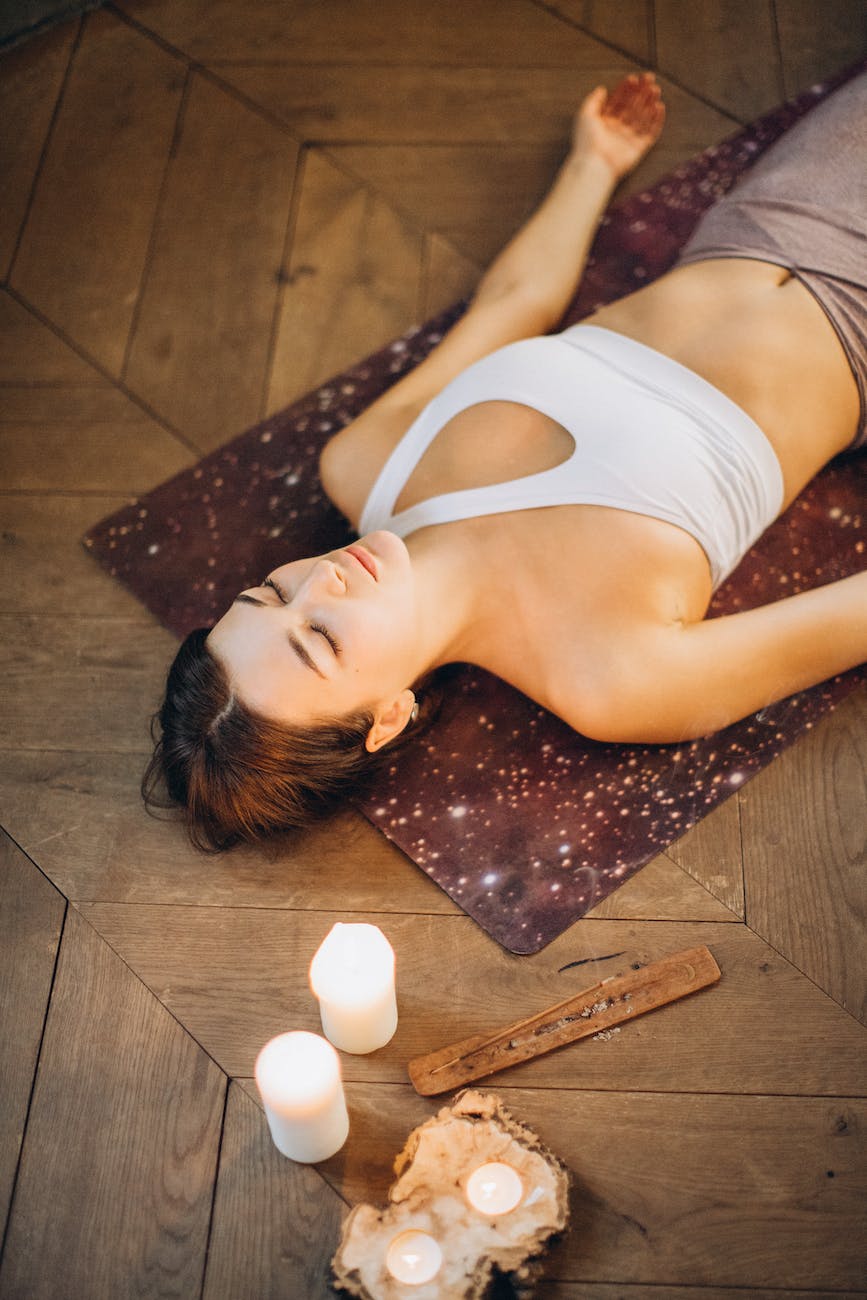
The ultimate grounding pose is, of course, Corpse Pose: Savasana
In addition to this pose being the most grounding pose you can do to reconnect with nature and truly get back to basics, this is also deemed one of the most difficult. This is due mostly to intimidation of the mental release more than the physical struggle. When we lie in Savasana, we are required to release the mind and expected to deepen into a state of conscious relaxation. This includes the mind, body, and breath.
At the end of every class, yoga instructors around the globe guide their participants into a deep state of relaxation. Most Americans find it difficult to sit still, fall asleep at night, or even the opposite, to stay awake as soon as they quiet their mind for a second due to constant over-stimulation throughout the day. The idea is to calm the mind yet stay conscious, release tension, reduce anxiety and stress, and allow the body to lie heavy without any movement, including the face.
Savasana is a practice of gradually relaxing one body part at a time, one muscle at a time, and one thought at a time
Yoga Journal
When you give your body the gift of deep relaxation, you begin to naturally remove stress and anxiety from the body. Tensions in the muscles release on a deeper level. The diaphragm begins to release and the breath becomes easy and absent from the mind. Sleep quality is improved when it’s time for bed. And a natural balance of energy is restored. Practicing Savasana on a daily basis can greatly improve your overall health.
To ensure a quality practice, make sure you are free from distractions, at least at the beginning. Make yourself comfortable. There is no rule to the posture, so support your body. Use pillows, blankets, bolsters, blocks, a chair, or even allow your legs to rest upward on the wall (this improves circulation and helps reduce ankle swelling). Use an eye pillow, incense, candles, essential oils, diffusers, music, the ocean, white noise, comfortable clothes, or anything else that gives you comfort. Position yourself in a support posture lying on your back, your side, or even you stomach. Prop pillows under or between your knees or ankles, under your lower back, hugging your arms, or under or around your belly if pregnant. Just get comfortable!
Now that your body is comfortable, it’s time to relax your mind. To do this, we distract your mind from all of the things your mind is distracting you from. We tell your mind what to think, or rather, what not to think. Since your mind insists on working, we will give it something to do. We will begin to direct your mind to release your body. This will do three things: 1. Give you mind something to work on and 2. Allow your body to fully relax, and 3. Reconnect your body with your mind. You can return to center, and drift off into a conscious state of deep relaxation. If you do this before bed, you will easily be able to fall asleep the more you practice it.
Here’s what to tell your mind to tell your body: Acknowledge every part of your body. I am talking about every single part. Start with your toes. Talk to you toes. Thank them for everything they do for you every single day. For carrying you around. For holding the weight of your body. For being squished into those fancy shoes. For keeping you balanced. For holding the energy of your organs (reflexology goes into this more). For everything they do. Talk to them one by one. Starting with the pinky toe, all the way up to the big toe. And as you do, tense them up. If you can’t tense up one at a time, tense them all up at the same time. scrunch them. straighten them. Use them until their are feeling energy and starting to fatigue. Tighten them until they cannot tighten any more. Then, release them with the breath. Allow them to release the tension. Allow them to release from the body through the mind. They are no longer needed at this moment. Allow them to release to the world around you, no longer holding any negativity. They are now out there, floating in space, in the universe around us, gathering up positivity and light. So that when they reconnect back to you, they are full of goodness, ready to take on the world and to give you good energy, positivity in your body, and ready for you to use again in a positive way. But, at this moment, they are no longer attached to your body. Your mind has released them, and you are no longer able to feel them, use them, wiggle them, or move them. They are gone. released. relaxed. Move on to the next bone, tissue, joint, organ, as you go up from the toes all the way through the body, one piece at a time, until you reach the crown of your head.
This may seem daunting at first. There are so many parts to the body. But, because there are so many parts to the body, there are so many places to hold tension and negativity. All of these places need a conscious release. And by asking your mind to release them one by one, by first acknowledging they exist and appreciating them for what they do for you, you learn to eventually not hold tension in these places. They are too valuable. And you need them too much. You now begin to change your mindset, your energy, and your purpose.
“When there is silence, one finds the anchor of the Universe within oneself.”
– Lao Tzu
To conclude, there are many yoga asanas to guide you into a place of grounding and reconnection to the earth and the world around you. I encourage you to explore more practices that help you return back to basics. I plan to provide more series, videos, eBooks, downloads and more information on these practices. I invite you to keep following my journey, and to comment something about yours. I am always interested to hear from my practitioners, followers, and friends. Feel free to email me any time, find me on social media or comment below. I hope these asanas found you well, and that you begin to incorporate them into your daily lives. Remember to always listen to your body. Every day is different. And support your body where it needs. Until the next series, Namaste!
Stay Grounded. Stay Inspired.

 Lindsey's Life
Leave a comment